
Frequently Asked Questions
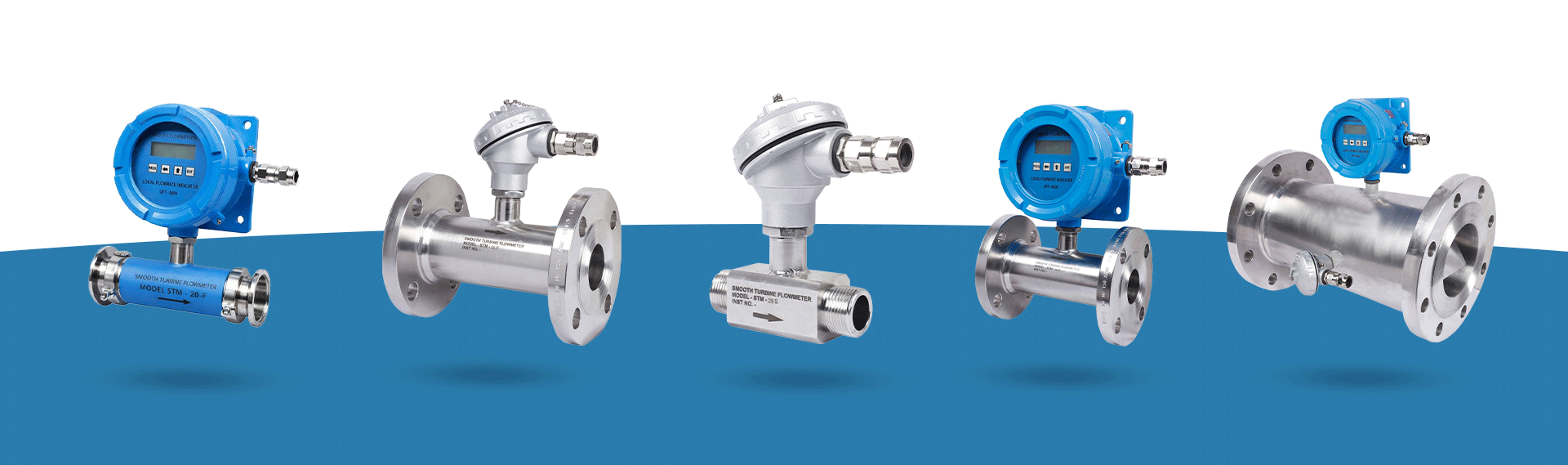
Turbine Flow Meter - STM Series
1. What is an STM Series Turbine Flow Meter?
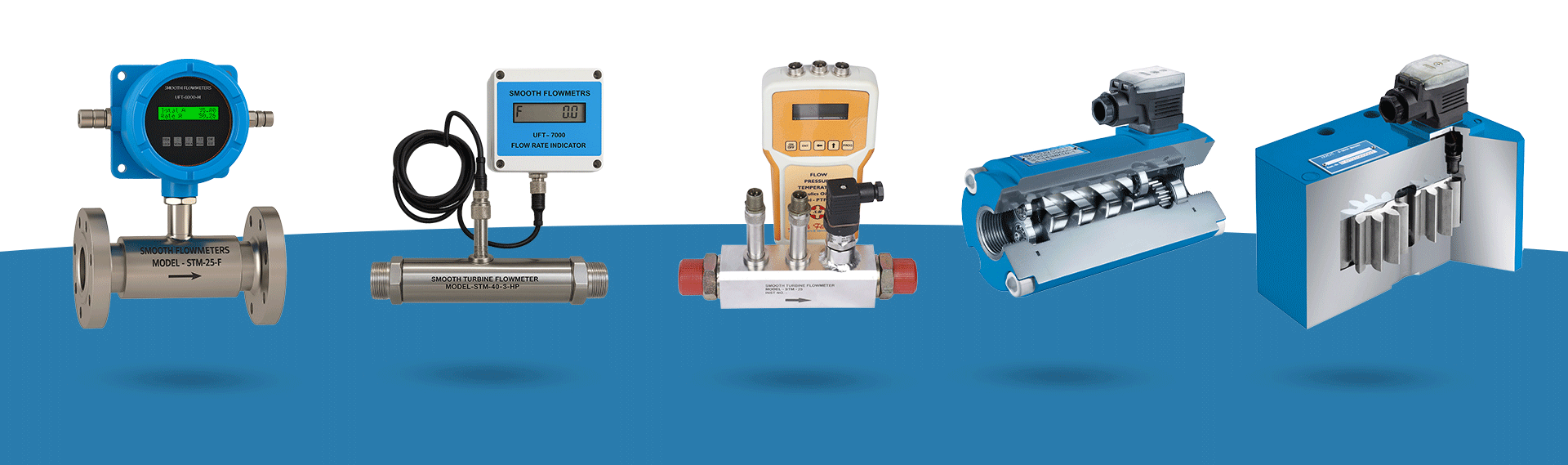
The STM Series Turbine Flow Meter is a precision volumetric flow measuring device that uses a rotor and bearing assembly to measure the flow rate of liquids with high accuracy and repeatability.
2. What is the accuracy of the STM Series Turbine Flow Meter?
The STM Series provides an accuracy of ±0.5% of actual flow, making it suitable for industrial process measurement, batching, and custody transfer applications.
3. What is the repeatability of the STM Series Flow Meter?
The repeatability is 0.05%, ensuring consistent and reliable measurement over extended periods.
4. What liquids can be measured using the STM Series?
The STM Series can measure water, treated water, cooling water, diesel, petrol, solvents, alcohol, edible oils, aviation fuel, chemicals, and many other conductive and non-conductive liquids.
5. What pipe sizes are available in the STM Series?
The STM Series is available in sizes ranging from DN12 (½") to DN200 (8"), covering flow rates from 0.18 m³/hr up to 1100 m³/hr.
6. What is the maximum operating pressure?
The STM Series is designed for operating pressures up to 400 Bar for screwed meter versions, making it suitable for high-pressure applications.
7. What is the maximum operating temperature?
The standard maximum temperature is 120°C, with special versions available for temperatures up to 300°C on request.
8. What viscosity range can the STM Series handle?
The STM Series can accurately measure liquids with viscosities up to 100 cP, making it suitable for a wide range of industrial fluids.
9. What materials are used in the construction of the STM Flow Meter?
The meter body and flanges are manufactured from SS316 Stainless Steel, while the rotor uses ANC-21 material and bearings are available in Tungsten Carbide, PTFE, or PEEK.
10. What output signals are available?
The STM Series provides Square Wave Voltage Pulse Output and can be integrated with 4-20mA transmitters, batch controllers, RS232, RS485, and Modbus communication systems.
11. Can the STM Series be used for batching and loading systems?
Yes. The STM Series is widely used in alcohol loading systems, ethanol blending systems, tanker unloading systems, solvent batching systems, and fuel transfer applications.
12. What display options are available?
The meter is available with local displays, remote digital displays, totalizers, flow rate indicators, batch controllers, and intrinsically safe explosion-proof versions.
13. What are the advantages of the STM Series Turbine Flow Meter?
Key advantages include low pressure drop, fast response, bidirectional flow measurement capability, corrosion resistance, long-term accuracy, and low maintenance requirements.
14. Which industries commonly use STM Turbine Flow Meters?
Applications include pharmaceutical plants, water treatment, food & beverage industries, petrochemical plants, automotive industries, defense projects, marine applications, and industrial process plants.
15. Why choose the STM Series Turbine Flow Meter?
The STM Series combines high accuracy (±0.5%), excellent repeatability (0.05%), SS316 construction, high-pressure capability, and advanced communication options, making it a reliable solution for critical flow measurement applications.
1. What is the HP Series Turbine Flow Meter?
The HP Series is a precision turbine flow meter specially designed for measuring hydraulic oil, gear oil, engine oil, edible oil, and aviation fuel with high accuracy and reliability.
2. What liquids can be measured using the HP Series Flow Meter?
The HP Series is suitable for Gear Oil, Engine Oil, Hydraulic Oil, Edible Oil, Aviation Fuel, and other clean liquids with viscosities up to 100 cP.
3. What is the measurement accuracy of the HP Series?
The HP Series provides measurement accuracy of ±0.5% of measured value, making it ideal for critical industrial applications.
4. What is the repeatability of the HP Series Flow Meter?
The meter offers excellent repeatability of ±0.05%, ensuring highly consistent flow measurement results.
5. What flow ranges are available?
The HP Series is available in multiple sizes with flow ranges from 2 LPM to 600 LPM, depending on the meter size selected.
6. What is the maximum operating pressure of the HP Series?
The HP Series can operate at pressures up to 400 Bar, making it suitable for high-pressure hydraulic systems.
7. What is the maximum operating temperature?
The standard temperature rating is 150°C, with special versions available up to 300°C on request.
8. What viscosity range can the HP Series handle?
The meter is designed for fluids with viscosities up to 100 cP, providing accurate measurement across a wide range of industrial oils.
9. What materials are used in the HP Series construction?
The meter body is manufactured from SS316 Stainless Steel, with SS430/ANC21 rotor, ANC21 bearing support, and Tungsten Carbide or Stainless Steel ball bearings.
10. Can the HP Series be used in hydraulic power packs and lubrication systems?
Yes. The HP Series is specifically designed for hydraulic oil monitoring, lubrication systems, test benches, and oil circulation systems.
11. Is the HP Series suitable for high-pressure hydraulic applications?
Yes. With a pressure rating of up to 400 Bar, the HP Series is ideal for hydraulic presses, hydraulic power units, and industrial hydraulic circuits.
12. What display and output options are available?
The HP Series can be supplied with meter-mounted displays, remote displays, pneumatic or electronic filling controls, and explosion-proof amplifier assemblies.
13. Can the HP Series be used in hazardous areas?
Yes. Explosion-proof amplifier assemblies are available, making the meter suitable for hazardous and industrial environments.
14. What are the key advantages of the HP Series Flow Meter?
The HP Series offers low total cost of ownership, long service life, low maintenance requirements, fast response time, stable performance, and long-term accuracy without frequent recalibration.
15. Why choose the HP Series Hydraulic Oil Turbine Flow Meter?
The HP Series combines high-pressure capability (400 Bar), high accuracy (±0.5%), SS316 construction, excellent repeatability, and specialized hydraulic oil measurement performance, making it an ideal solution for demanding industrial applications.
1. What is a TCF Series Sanitary Turbine Flow Meter?
The TCF Series is a hygienic turbine flow meter specifically designed for accurate measurement of clean liquids in pharmaceutical, food, beverage, dairy, and biotechnology applications.
2. What applications is the TCF Series designed for?
The TCF Series is ideal for measuring and batch controlling WFI water, USP water, deionized water, vaccines, clean pharmaceutical liquids, milk, cream, edible oils, wine, beer, spirits, soft drinks, and juices.
3. Why is the TCF Series called a sanitary flow meter?
The meter is designed with sanitary Tri-Clover process connections and hygienic SS316 construction, making it suitable for applications where cleanliness and product purity are critical.
4. What is the accuracy of the TCF Series Flow Meter?
The TCF Series provides high measurement accuracy of ±0.5% of actual flow, making it suitable for pharmaceutical and food-grade processes.
5. What is the repeatability of the TCF Series?
The meter offers excellent repeatability of 0.05%, ensuring highly consistent and reliable measurement results.
6. What flow ranges are available?
Depending on meter size, the TCF Series covers flow ranges from 13 LPM to 1100 LPM, making it suitable for both small and large sanitary process lines.
7. What pipe sizes are available in the TCF Series?
The TCF Series is available in sizes from DN20 (¾") to DN50 (2") with sanitary Tri-Clover connections.
8. What is the maximum operating pressure?
The standard maximum operating pressure is 15 Bar, suitable for most sanitary process applications.
9. What is the maximum operating temperature?
The meter can operate up to 120°C, with special versions available up to 250°C on request.
10. What materials are used in the TCF Series construction?
The meter body is manufactured from SS316 Stainless Steel, with SS430/ANC21 rotor, ANC21 bearing support, and Tungsten Carbide or Stainless Steel bearings.
11. Can the TCF Series be used for pharmaceutical applications?
Yes. The TCF Series is specifically designed for pharmaceutical liquids, purified water systems, vaccine manufacturing, and hygienic processing applications.
12. Is the TCF Series suitable for food and beverage industries?
Yes. It is widely used for milk, cream, edible oil, beer, wine, spirits, soft drinks, juices, and other consumable liquid applications.
13. What output and display options are available?
The meter can be supplied with local displays, remote displays, pulse outputs, batching systems, filling controls, and explosion-proof amplifier assemblies.
14. What are the key advantages of the TCF Series?
Key advantages include hygienic design, high accuracy, fast response, low maintenance, long service life, low pressure drop, and excellent long-term stability.
15. Why choose the TCF Series Sanitary Turbine Flow Meter?
The TCF Series combines sanitary Tri-Clover connections, SS316 construction, ±0.5% accuracy, 0.05% repeatability, and compliance with hygienic process requirements, making it an ideal flow measurement solution for pharmaceutical and food-grade applications.
1. What is a W-Series Wafer Turbine Flow Meter?
The W-Series Wafer Turbine Flow Meter is a compact, high-accuracy flow measurement solution specifically designed for oil, fuel, petrochemical, and hydrocarbon applications. Its wafer-style construction allows easy installation between flanges while maintaining excellent measurement performance.
2. Which fluids can be measured using the W-Series Turbine Flow Meter?
The W-Series is suitable for diesel, petrol, kerosene, aviation fuel (ATF), fuel oil, lube oil, hydraulic oil, crude oil derivatives, solvents, and other low-viscosity petroleum products.
3. Why is the W-Series preferred in Oil & Gas applications?
The meter offers high accuracy, excellent repeatability, low pressure drop, fast response time, and reliable performance in fuel transfer, blending, loading, and consumption monitoring systems.
4. What is the accuracy of the W-Series Flow Meter?
The W-Series provides measurement accuracy up to ±0.5% of actual flow, making it suitable for critical industrial and fuel monitoring applications.
5. What is the repeatability of the W-Series?
The repeatability is typically ±0.1%, ensuring consistent and reliable measurement for process control and inventory management.
6. What pipe sizes are available?
The W-Series is manufactured in sizes ranging from ¾" (DN20) to 6" (DN150) to accommodate a wide variety of pipeline flow requirements.
7. Can the W-Series be used for diesel flow measurement?
Yes. The W-Series is widely used for diesel transfer skids, diesel generator fuel monitoring, tanker loading systems, and fuel consumption measurement.
8. Is the W-Series suitable for aviation fuel applications?
Yes. The meter can be used for Aviation Turbine Fuel (ATF) and other refined petroleum products where accurate flow measurement is required.
9. Can the W-Series be used for tanker loading and unloading?
Yes. The meter is commonly installed in tanker loading, unloading, fuel dispatch, and terminal transfer systems.
10. What materials are used in the W-Series construction?
The meter body is manufactured from SS316 Stainless Steel, providing excellent corrosion resistance and long service life in demanding industrial environments.
11. What output options are available?
Available outputs include Pulse Output, Frequency Output, 4-20mA Analog Output, RS485 Modbus Communication, Batch Controller Interface, and Local/Remote Displays.
12. Is the W-Series suitable for hazardous areas?
Yes. Explosion-proof and intrinsically safe versions can be supplied for use in oil terminals, refineries, fuel depots, and hazardous process areas.
13. What are the advantages of the wafer design?
The wafer design reduces installation space, lowers overall weight, minimizes piping modifications, and provides a cost-effective solution for industrial flow measurement.
14. Which industries commonly use the W-Series Flow Meter?
Oil & Gas, Refineries, Petrochemical Plants, Fuel Depots, Tank Farms, Fuel Loading Terminals, Marine Fuel Systems, Power Plants, and Industrial Fuel Handling Facilities.
15. Why choose the W-Series Wafer Turbine Flow Meter?
The W-Series combines compact wafer construction, ±0.5% accuracy, ±0.1% repeatability, SS316 construction, low pressure drop, explosion-proof options, and proven performance in hydrocarbon applications, making it an ideal choice for oil and gas flow measurement.
1. What is a Flow Rate Indicator and Totalizer?
A Flow Rate Indicator and Totalizer is an electronic device that receives pulse signals from a flow meter and displays both instantaneous flow rate and accumulated total flow. It also provides outputs for monitoring, alarms, batching, and PLC integration.
2. Which flow meters can be connected to Smooth Flowmeters electronics?
The electronics can accept signals from:
• Turbine Flow Meters
• PD Flow Meters
• Gear Flow Meters
• Screw Flow Meters
• Electromagnetic Flow Meters (pulse output)
• Ultrasonic Flow Meters
• Magnetic Pickup Sensors
• Proximity Sensors
• Open Collector Outputs
• Turbine Flow Meters
• PD Flow Meters
• Gear Flow Meters
• Screw Flow Meters
• Electromagnetic Flow Meters (pulse output)
• Ultrasonic Flow Meters
• Magnetic Pickup Sensors
• Proximity Sensors
• Open Collector Outputs
3. What is the difference between the 7000-FRTD and 7000-FRT?
7000-FRTD is a panel-mounted LED display indicator with separate flow rate and totalizer displays.
7000-FRT is an advanced LCD-based flow indicator capable of processing dual pulse inputs (A & B) and calculating:
• Flow A
• Flow B
• A+B
• A-B
• Total A
• Total B
making it suitable for blending and differential flow applications.
7000-FRT is an advanced LCD-based flow indicator capable of processing dual pulse inputs (A & B) and calculating:
• Flow A
• Flow B
• A+B
• A-B
• Total A
• Total B
making it suitable for blending and differential flow applications.
4. What is the difference between UFT-8000 and UFT-9000?
UFT-8000
• Externally powered (24 VDC)
• Meter-mounted design
• RS485 Modbus communication
• Relay outputs
• Analog outputs
UFT-9000
• Battery-powered operation
• Internal lithium battery
• Ultra-low power consumption
• Ideal for remote field installations without power availability
• Externally powered (24 VDC)
• Meter-mounted design
• RS485 Modbus communication
• Relay outputs
• Analog outputs
UFT-9000
• Battery-powered operation
• Internal lithium battery
• Ultra-low power consumption
• Ideal for remote field installations without power availability
5. Can these electronics display both flow rate and total simultaneously?
Yes. All models provide simultaneous display of:
✔ Instantaneous Flow Rate
✔ Accumulated Total Volume
allowing operators to monitor process performance and consumption at the same time.
✔ Instantaneous Flow Rate
✔ Accumulated Total Volume
allowing operators to monitor process performance and consumption at the same time.
6. Do these indicators support Modbus communication?
Yes. The 7000-FRTD, 7000-FRT, UFT-8000, and UFT-9000 support RS485 Modbus RTU communication, allowing integration with PLC, DCS, SCADA, and Building Management Systems (BMS).
7. Are analog outputs available?
Yes. Depending on the model, the electronics provide:
• 4–20 mA output
• 0–10 VDC output
for retransmission of flow rate or process values to control systems.
• 4–20 mA output
• 0–10 VDC output
for retransmission of flow rate or process values to control systems.
8. Can the electronics be used for batching applications?
Yes. The relay outputs can be programmed for batch control, preset quantity control, and automatic shutoff of valves or pumps once the desired quantity has been delivered.
9. What is K-Factor Linearization and why is it important?
K-Factor Linearization compensates for flow meter non-linearity across different flow ranges.
Smooth Flowmeters electronics support up to:
• 10-point linearization (7000-FRTD, UFT Series)
• 16-point linearization (7000-FRT)
This improves overall measurement accuracy across the meter's operating range.
Smooth Flowmeters electronics support up to:
• 10-point linearization (7000-FRTD, UFT Series)
• 16-point linearization (7000-FRT)
This improves overall measurement accuracy across the meter's operating range.
10. Can unauthorized users modify settings?
No. All models feature password-protected programming and lockout functionality to prevent unauthorized changes to calibration, alarms, presets, and communication settings.
11. How is data protected during power failures?
The electronics use NVRAM and non-volatile flash memory that retain programmed settings, totalizer values, calibration constants, and operational parameters even during power loss.
12. Are relay outputs available for alarms and process control?
Yes. The electronics provide programmable relay outputs that can be configured for:
• High flow alarm
• Low flow alarm
• Batch completion
• Totalizer preset output
• Pump control
• Valve control
making them suitable for automation applications.
• High flow alarm
• Low flow alarm
• Batch completion
• Totalizer preset output
• Pump control
• Valve control
making them suitable for automation applications.
13. Can the UFT-9000 operate without external power?
Yes. The UFT-9000 is specifically designed for remote installations and can operate from an internal lithium battery, making it ideal for:
• Oil field locations
• Remote pipelines
• Tank farms
• Utility metering stations
• Hazardous areas
where mains power may not be available.
• Oil field locations
• Remote pipelines
• Tank farms
• Utility metering stations
• Hazardous areas
where mains power may not be available.
14. Which industries use Smooth Flowmeters electronics?
These electronics are widely used in:
• Oil & Gas
• Petrochemical Plants
• Fuel Distribution Systems
• Chemical Industries
• Water Treatment Plants
• Power Plants
• Food & Beverage Industries
• Pharmaceutical Industries
• Hydraulic Test Benches
• Process Manufacturing Plants
• Oil & Gas
• Petrochemical Plants
• Fuel Distribution Systems
• Chemical Industries
• Water Treatment Plants
• Power Plants
• Food & Beverage Industries
• Pharmaceutical Industries
• Hydraulic Test Benches
• Process Manufacturing Plants
15. Why choose Smooth Flowmeters Electronics?
Smooth Flowmeters electronics provide:
✔ Real-Time Flow Monitoring
✔ Totalization & Batch Control
✔ RS485 Modbus Communication
✔ 4-20mA / 0-10V Outputs
✔ Password Protected Programming
✔ Non-Volatile Memory
✔ Programmable Alarm Relays
✔ K-Factor Linearization
✔ Panel Mounted & Field Mounted Options
✔ Battery Powered Models for Remote Installations
making them a reliable solution for industrial flow measurement, automation, and process control applications.
✔ Real-Time Flow Monitoring
✔ Totalization & Batch Control
✔ RS485 Modbus Communication
✔ 4-20mA / 0-10V Outputs
✔ Password Protected Programming
✔ Non-Volatile Memory
✔ Programmable Alarm Relays
✔ K-Factor Linearization
✔ Panel Mounted & Field Mounted Options
✔ Battery Powered Models for Remote Installations
making them a reliable solution for industrial flow measurement, automation, and process control applications.
1. What is an Electromagnetic Flow Meter?
An Electromagnetic Flow Meter (Mag meter) is a highly accurate flow measuring device that uses Faraday's Law of Electromagnetic Induction to measure the flow of conductive liquids without any moving parts.
2. Which liquids can be measured using the SEMF Series?
The SEMF Series is suitable for water, treated water, wastewater, RO water, cooling water, acids, alkalis, chemicals, liquid fertilizers, food-grade liquids, and other electrically conductive fluids.
3. What pipe sizes are available in the SEMF Series?
The SEMF Series is available in sizes ranging from ½" (DN15) to 6" (DN150), making it suitable for small process lines as well as industrial piping systems.
4. What is the accuracy of the SEMF Series Flow Meter?
The SEMF Series offers high measurement accuracy up to ±0.5% of reading, ensuring reliable process monitoring and control.
5. Can the SEMF Series measure diesel, petrol, or oils?
No. Electromagnetic flow meters only work with electrically conductive liquids. Non-conductive fluids such as diesel, petrol, kerosene, and oils cannot be measured using this technology.
6. Why choose an Electromagnetic Flow Meter over a Turbine Flow Meter?
Electromagnetic Flow Meters have no moving parts, require minimal maintenance, are unaffected by viscosity changes, and perform exceptionally well with water, chemicals, and wastewater applications.
7. Does the SEMF Series have moving parts?
No. The SEMF Series operates without any moving parts, reducing wear, maintenance requirements, and long-term operating costs.
8. What industries commonly use SEMF Electromagnetic Flow Meters?
Water Treatment Plants, Wastewater Plants, Chemical Industries, Pharmaceutical Industries, Food & Beverage Plants, Fertilizer Plants, Textile Industries, and Utility Systems.
9. Can the SEMF Series measure corrosive chemicals?
Yes. With the correct liner and electrode material selection, the SEMF Series can accurately measure aggressive acids, alkalis, and corrosive chemicals.
10. What output signals are available?
The SEMF Series can be supplied with Pulse Output, 4-20mA Analog Output, RS485 Modbus Communication, Batch Controller Interface, and Local/Remote Digital Displays.
11. Does the pipe need to remain full for accurate measurement?
Yes. Electromagnetic Flow Meters require a completely full pipe to maintain measurement accuracy and stable operation.
12. What liner materials are available in the SEMF Series?
Depending on the application, the SEMF Series can be supplied with PTFE, PFA, Rubber, Neoprene, or Polyurethane liners to suit different chemical and process requirements.
13. What electrode materials are available?
Electrode options typically include SS316, Hastelloy C, Titanium, Tantalum, and Platinum depending on fluid compatibility and process conditions.
14. Is the SEMF Series suitable for wastewater and slurry applications?
Yes. Electromagnetic Flow Meters are among the most preferred technologies for wastewater, sewage, sludge, slurry, and process water applications because they can handle suspended solids without affecting accuracy.
15. Why choose the SEMF Series Electromagnetic Flow Meter?
The SEMF Series combines high accuracy, no moving parts, low maintenance, excellent chemical compatibility, reliable performance in water and wastewater applications, and advanced communication options, making it an ideal solution for industrial flow measurement.
1. What is an SVC Series Screw Type Flow Meter?
The SVC Series is a high-precision positive displacement flow meter that uses two precision screw spindles to directly measure liquid volume. The displacement measuring principle provides highly accurate and pulsation-free flow measurement.
2. Which liquids can be measured using the SVC Series?
The SVC Series is ideal for hydraulic oils, lubricating oils, fuel oils, diesel, chemicals, polymers, resins, adhesives, and other low to extremely high viscosity liquids. It can handle viscosities up to 2,500,000 mm²/s (cSt) depending on operating conditions.
3. What is the measurement accuracy of the SVC Series?
The SVC Series provides a typical measurement accuracy of ±0.2% of the measured value, making it one of the most accurate flow measurement technologies available for liquids.
4. What is the repeatability of the SVC Series Flow Meter?
The repeatability is ±0.05% under stable operating conditions, ensuring highly reliable and consistent measurements over long periods.
5. Why choose a Screw Flow Meter instead of a Turbine Flow Meter?
Unlike turbine meters, the SVC Series uses a positive displacement measuring principle that is largely unaffected by viscosity changes, flow profile disturbances, or pulsating flow conditions, making it ideal for oils and viscous liquids.
6. Does the SVC Series create pressure pulsation in the process line?
No. The screw spindle design provides a pulsation-free measuring principle, ensuring smooth flow measurement without introducing pressure or flow pulsations into the system.
7. What flow ranges are available in the SVC Series?
Depending on the model size, the SVC Series covers flow ranges from 0.4 L/min up to 3,750 L/min, making it suitable for both low-flow dosing systems and high-capacity industrial applications.
8. What pressure ratings are available?
The standard versions can operate up to 250 Bar, while high-pressure versions are available up to 480 Bar, making the SVC Series ideal for hydraulic systems and high-pressure industrial applications.
9. What is the maximum operating temperature of the SVC Series?
Depending on the version and seal selection, the SVC Series can handle media temperatures from -40°C up to +210°C, allowing use in both low-temperature and high-temperature applications.
10. Does the SVC Series require straight pipe lengths before or after the meter?
No. One of the major advantages of the SVC Series is that it does not require inlet or outlet settling sections, allowing more compact machine and skid designs.
11. Can the SVC Series measure flow in both directions?
Yes. The SVC Series supports bidirectional flow measurement, and encoder versions can also detect the direction of flow.
12. What output and communication options are available?
The SVC Series can be supplied with square-wave pulse outputs, encoder outputs (up to 2,500 pulses per revolution), IO-Link communication, and remote electronics options for advanced automation systems.
13. Is the SVC Series available for hazardous area applications?
Yes. The SVC Series is available with ATEX and IECEx certified explosion-proof versions, making it suitable for oil & gas, fuel handling, and hazardous process environments.
14. Which industries commonly use SVC Screw Flow Meters?
The SVC Series is widely used in hydraulic test benches, lubrication systems, oil & gas facilities, chemical plants, polymer processing, marine systems, power plants, and fuel transfer applications.
15. Why choose the SVC Series Screw Type Flow Meter?
The SVC Series combines ±0.2% accuracy, ±0.05% repeatability, pulsation-free measurement, viscosity capability up to 2.5 million cSt, pressures up to 480 Bar, temperatures up to 210°C, bidirectional flow measurement, and ATEX certification, making it one of the most advanced positive displacement flow meters for demanding industrial applications.
1. What is a VC Series Gear Type Positive Displacement Flow Meter?
The VC Series is a high-precision positive displacement flow meter that uses two precision gears rotating inside a measuring chamber. Each gear rotation displaces a fixed volume of liquid, enabling direct and highly accurate volumetric flow measurement.
2. How does the VC Gear Flow Meter work?
As liquid flows through the meter, it drives two closely meshing gears. The gear rotation is detected by non-contact sensors that generate pulses proportional to the displaced volume. The pulse count is then converted into flow rate and totalized volume.
3. What measurement accuracy does the VC Series provide?
The VC Series offers a typical accuracy of ±0.3% of reading for liquids with viscosity above 20 cSt, making it suitable for precision measurement, dosing, and consumption monitoring applications.
4. What is the repeatability of the VC Series?
The repeatability is ±0.05% under stable operating conditions, ensuring consistent and reliable measurements even in demanding industrial processes.
5. Which liquids can be measured with the VC Series?
The VC Series can measure a wide range of lubricating and process liquids including:
• Hydraulic oil
• Lubricating oil
• Diesel fuel
• Brake fluid
• Skydrol
• Polyol & Isocyanate
• Resins & adhesives
• Paints & coatings
• Silicones
• Solvents
• Wax and specialty chemicals
• Hydraulic oil
• Lubricating oil
• Diesel fuel
• Brake fluid
• Skydrol
• Polyol & Isocyanate
• Resins & adhesives
• Paints & coatings
• Silicones
• Solvents
• Wax and specialty chemicals
6. What flow ranges are available in the VC Series?
The VC Series covers an exceptionally wide measuring range from 0.001 L/min up to 700 L/min, depending on the selected meter size. This makes it suitable for micro-dosing as well as high-flow industrial applications.
7. What is the maximum operating pressure of the VC Flow Meter?
Depending on the model and configuration, the VC Series can operate at pressures up to 480 Bar, making it suitable for hydraulic systems, test benches, and high-pressure process applications.
8. What temperature range can the VC Series handle?
The VC Series supports media temperatures from -60°C up to +210°C, depending on the housing material, seal selection, and electronics version.
9. Can the VC Series measure highly viscous liquids?
Yes. The VC Series is designed to measure liquids with viscosities up to 2,500,000 mm²/s (cSt), making it ideal for oils, resins, adhesives, waxes, and other highly viscous fluids.
10. Does the VC Flow Meter require straight pipe runs?
No. Due to its positive displacement measuring principle, the VC Series does not require inlet or outlet straight pipe sections, simplifying installation and reducing overall system footprint.
11. Can the VC Series measure flow in both directions?
Yes. The VC Series supports bidirectional flow measurement. Dual-channel sensing allows the electronics to detect both flow rate and flow direction accurately.
12. What output options are available with the VC Series?
The VC Series is available with:
• Standard pulse output
• High-resolution encoder output
• IO-Link communication
• Remote electronics versions
• ATEX/IECEx hazardous area versions
allowing seamless integration into PLC, SCADA, and industrial automation systems.
• Standard pulse output
• High-resolution encoder output
• IO-Link communication
• Remote electronics versions
• ATEX/IECEx hazardous area versions
allowing seamless integration into PLC, SCADA, and industrial automation systems.
13. What is the advantage of the encoder version?
Encoder versions can generate up to 2,500 pulses per revolution, providing significantly higher measurement resolution and improved performance in batching, dosing, and test bench applications requiring precise flow control.
14. Is the VC Series available for hazardous area applications?
Yes. The VC Series is available with ATEX and IECEx certified explosion-proof versions. These models can be installed in hazardous zones when used with the appropriate intrinsically safe switching amplifier.
15. Why choose the VC Series Gear Flow Meter?
The VC Series offers:
✔ Direct volumetric measurement
✔ ±0.3% accuracy and ±0.05% repeatability
✔ Flow measurement from 0.001 to 700 L/min
✔ Pressure capability up to 480 Bar
✔ Temperature range up to 210°C
✔ Viscosity handling up to 2.5 million cSt
✔ Bi-directional measurement
✔ Encoder & IO-Link options
✔ ATEX/IECEx certifications
✔ Low pressure drop and compact installation
✔ Direct volumetric measurement
✔ ±0.3% accuracy and ±0.05% repeatability
✔ Flow measurement from 0.001 to 700 L/min
✔ Pressure capability up to 480 Bar
✔ Temperature range up to 210°C
✔ Viscosity handling up to 2.5 million cSt
✔ Bi-directional measurement
✔ Encoder & IO-Link options
✔ ATEX/IECEx certifications
✔ Low pressure drop and compact installation
1. What is the VCA Series Gear Type Positive Displacement Flow Meter?
The VCA Series is a precision positive displacement flow meter designed for accurate measurement of liquid flow and volume. It uses two high-precision gears that rotate within a measuring chamber, displacing a fixed volume of fluid with each rotation for direct volumetric measurement.
2. How does a VCA Gear Flow Meter work?
As liquid passes through the meter, it drives two precision gears. Sensors mounted in the cover detect gear movement without physical contact and generate pulse signals proportional to the volume passing through the meter. These pulses are converted into flow rate and totalized volume readings.
3. What are the key advantages of the VCA Series over other flow meter technologies?
The VCA Series offers:
• High measurement accuracy
• Excellent repeatability
• Very low pressure drop
• Bi-directional flow measurement
• No straight pipe requirements
• Compact installation
• High dynamic response
• Low noise operation
These benefits make it ideal for precision industrial applications.
• High measurement accuracy
• Excellent repeatability
• Very low pressure drop
• Bi-directional flow measurement
• No straight pipe requirements
• Compact installation
• High dynamic response
• Low noise operation
These benefits make it ideal for precision industrial applications.
4. What flow ranges are available in the VCA Series?
The VCA Series is available in multiple sizes with flow ranges from:
• 0.02 L/min to 4 L/min (VCA 0.04)
• 0.08 L/min to 10 L/min (VCA 0.1)
• 0.25 L/min to 10 L/min (VCA 0.2)
• 1 L/min to 65 L/min (VCA 2)
• 1 L/min to 200 L/min (VCA 5)
This allows selection of the optimum meter for both low-flow and high-flow applications.
• 0.02 L/min to 4 L/min (VCA 0.04)
• 0.08 L/min to 10 L/min (VCA 0.1)
• 0.25 L/min to 10 L/min (VCA 0.2)
• 1 L/min to 65 L/min (VCA 2)
• 1 L/min to 200 L/min (VCA 5)
This allows selection of the optimum meter for both low-flow and high-flow applications.
5. What liquids can be measured using the VCA Series?
The VCA Series is suitable for lubricating liquids such as:
• Hydraulic oils
• Lubricating oils
• Diesel fuel
• Brake fluid
• Skydrol
• Paints and coatings
• Polyol and Isocyanate
• Adhesives and resins
• Greases
• Silicones
• Wax
• Solvents
• Hydraulic oils
• Lubricating oils
• Diesel fuel
• Brake fluid
• Skydrol
• Paints and coatings
• Polyol and Isocyanate
• Adhesives and resins
• Greases
• Silicones
• Wax
• Solvents
6. What measurement accuracy can be expected from the VCA Series?
The VCA Series provides a typical measurement accuracy of ±1.0% of reading for fluids with viscosity above 20 mm²/s (cSt), making it suitable for process monitoring, dosing, and consumption measurement applications.
7. Can the VCA Series measure flow in both directions?
Yes. The VCA Series supports flow measurement in any direction. Dual-channel sensor versions can also detect flow direction, making them suitable for bidirectional hydraulic and process systems.
8. Does the VCA Flow Meter require straight pipe lengths?
No. The positive displacement measuring principle eliminates the need for upstream or downstream straight pipe runs. This allows installation in compact systems where space is limited.
9. What is the maximum operating pressure of the VCA Series?
Depending on the model, the VCA Series can operate at pressures up to:
• 240 Bar for VCA 0.04, 0.1 and VCA 5
• 200 Bar for VCA 0.2 and VCA 2
This makes the meter suitable for demanding hydraulic and industrial applications.
• 240 Bar for VCA 0.04, 0.1 and VCA 5
• 200 Bar for VCA 0.2 and VCA 2
This makes the meter suitable for demanding hydraulic and industrial applications.
10. What viscosity range can the VCA Series handle?
The VCA Series can measure liquids with viscosities up to 4,000 mm²/s (cSt) while maintaining stable and reliable performance across a wide operating range.
11. What temperature range is supported by the VCA Series?
The standard VCA Series operates within:
• Ambient Temperature: -10°C to +80°C
• Media Temperature: -10°C to +80°C
allowing use in many industrial fluid handling applications.
• Ambient Temperature: -10°C to +80°C
• Media Temperature: -10°C to +80°C
allowing use in many industrial fluid handling applications.
12. What output signals are available with the VCA Series?
The VCA Series provides pulse outputs via integrated electronics with:
• PNP or NPN output options
• Square-wave pulse signals
• Single-channel or dual-channel versions
• Supply voltage: 12–30 VDC
These outputs can be connected directly to PLCs, counters, displays, and automation systems.
• PNP or NPN output options
• Square-wave pulse signals
• Single-channel or dual-channel versions
• Supply voltage: 12–30 VDC
These outputs can be connected directly to PLCs, counters, displays, and automation systems.
13. Why are dual-channel sensors beneficial?
Dual-channel versions provide:
• Higher measurement resolution
• Flow direction detection
• Improved signal processing
• Better control accuracy in dosing and batching systems
Up to four pulses per tooth volume can be processed for enhanced precision.
• Higher measurement resolution
• Flow direction detection
• Improved signal processing
• Better control accuracy in dosing and batching systems
Up to four pulses per tooth volume can be processed for enhanced precision.
14. Which industries commonly use VCA Gear Flow Meters?
The VCA Series is widely used in:
• Hydraulic systems
• Automotive test benches
• Marine fuel monitoring
• Paint and coating systems
• Chemical processing plants
• Plastics and polyurethane production
• Adhesive dispensing systems
• Filling and dosing machines
• Hydraulic systems
• Automotive test benches
• Marine fuel monitoring
• Paint and coating systems
• Chemical processing plants
• Plastics and polyurethane production
• Adhesive dispensing systems
• Filling and dosing machines
15. Why should I choose a VCA Gear Type Positive Displacement Flow Meter?
The VCA Series combines:
✔ Direct volumetric measurement
✔ High accuracy (±1.0%)
✔ Low pressure loss
✔ Compact design
✔ Bi-directional measurement
✔ Wide viscosity handling capability
✔ High-pressure operation up to 240 Bar
✔ Excellent repeatability
✔ Easy PLC integration
✔ Proven reliability in hydraulic, chemical, dosing, and industrial applications
making it one of the most reliable solutions for precision liquid flow measurement.
✔ Direct volumetric measurement
✔ High accuracy (±1.0%)
✔ Low pressure loss
✔ Compact design
✔ Bi-directional measurement
✔ Wide viscosity handling capability
✔ High-pressure operation up to 240 Bar
✔ Excellent repeatability
✔ Easy PLC integration
✔ Proven reliability in hydraulic, chemical, dosing, and industrial applications
making it one of the most reliable solutions for precision liquid flow measurement.
1. What is a TM Series Turbine Flow Meter?
The TM Series Turbine Flow Meter is a high-precision flow measurement device designed for continuous measurement of clean liquids. It uses a turbine rotor that rotates proportionally to the flow velocity, generating pulse signals that are converted into flow rate and total volume measurements.
2. How does a turbine flow meter work?
As liquid passes through the meter, it drives a precision turbine rotor. The rotor speed is directly proportional to the flow velocity. A magnetic pickup sensor detects rotor movement and converts it into electrical pulse signals for flow measurement and totalization.
3. What liquids can be measured using the TM Series?
The TM Series is suitable for:
• Diesel
• Fuel Oil
• Lubricating Oil
• Hydraulic Oil
• Solvents
• Petrochemical Products
• Process Chemicals
• Light Hydrocarbons
• Industrial Liquids
It is ideal for clean liquids with low to moderate viscosity.
• Diesel
• Fuel Oil
• Lubricating Oil
• Hydraulic Oil
• Solvents
• Petrochemical Products
• Process Chemicals
• Light Hydrocarbons
• Industrial Liquids
It is ideal for clean liquids with low to moderate viscosity.
4. What flow ranges are available in the TM Series?
The TM Series covers an exceptionally wide flow range from approximately 0.92 L/min up to 66,667 L/min, depending on the selected meter size.
5. What accuracy can be expected from the TM Series?
Depending on meter size and configuration, the TM Series offers:
• ±1.0% accuracy on smaller models
• ±0.5% accuracy on mid-range models
• ±0.4% accuracy on larger models
making it suitable for critical industrial measurement applications.
• ±1.0% accuracy on smaller models
• ±0.5% accuracy on mid-range models
• ±0.4% accuracy on larger models
making it suitable for critical industrial measurement applications.
6. What is the maximum operating pressure of the TM Series?
The TM Series is available with pressure ratings up to 400 Bar, making it suitable for high-pressure fuel, hydraulic, and process applications.
7. What temperature range can the TM Series handle?
The TM Series is available in multiple temperature versions:
• Standard: up to 120°C
• High Temperature Version 1: up to 200°C
• High Temperature Version 2: up to 400°C
• ATEX Versions available for hazardous areas
• Standard: up to 120°C
• High Temperature Version 1: up to 200°C
• High Temperature Version 2: up to 400°C
• ATEX Versions available for hazardous areas
8. What materials are used in the TM Series construction?
The TM Series features:
• Stainless Steel Housing (1.4541)
• Stainless Steel or Carbon Steel Flanges
• PTFE Bearings or Tungsten Carbide Bearings
ensuring long-term durability in demanding industrial environments.
• Stainless Steel Housing (1.4541)
• Stainless Steel or Carbon Steel Flanges
• PTFE Bearings or Tungsten Carbide Bearings
ensuring long-term durability in demanding industrial environments.
9. What industries commonly use TM Series Turbine Flow Meters?
The TM Series is widely used in:
• Oil & Gas
• Refineries
• Petrochemical Plants
• Chemical Processing
• Fuel Terminals
• Hydraulic Test Benches
• Power Generation
• Marine Fuel Systems
• Process Industries
• Oil & Gas
• Refineries
• Petrochemical Plants
• Chemical Processing
• Fuel Terminals
• Hydraulic Test Benches
• Power Generation
• Marine Fuel Systems
• Process Industries
10. Can the TM Series be used in hazardous areas?
Yes. The TM Series is available with ATEX-certified explosion-proof versions suitable for hazardous areas commonly found in oil terminals, refineries, and chemical plants.
11. What output signal does the TM Series provide?
The standard version provides:
• Pulse/Frequency Output
• Square Wave Signal
• 12–30 VDC Supply
• PLC/SCADA Compatible Signal Interface
for seamless integration into industrial control systems.
• Pulse/Frequency Output
• Square Wave Signal
• 12–30 VDC Supply
• PLC/SCADA Compatible Signal Interface
for seamless integration into industrial control systems.
12. What bearing options are available?
The TM Series can be supplied with:
• PTFE Bearings for chemically aggressive fluids
• Tungsten Carbide Bearings for longer life and enhanced durability
depending on the application requirements.
• PTFE Bearings for chemically aggressive fluids
• Tungsten Carbide Bearings for longer life and enhanced durability
depending on the application requirements.
13. Does the TM Series require straight pipe lengths?
Yes. For optimum performance and specified accuracy, a minimum installation arrangement of:
• 10 x DN straight pipe upstream
• 5 x DN straight pipe downstream
is recommended.
• 10 x DN straight pipe upstream
• 5 x DN straight pipe downstream
is recommended.
14. Why is the TM Series ideal for fuel measurement applications?
The TM Series offers:
• High accuracy
• Fast response time
• Low pressure loss
• Excellent repeatability
• High pressure capability
• Wide flow range
making it ideal for diesel, fuel oil, aviation fuel, and hydrocarbon measurement systems.
• High accuracy
• Fast response time
• Low pressure loss
• Excellent repeatability
• High pressure capability
• Wide flow range
making it ideal for diesel, fuel oil, aviation fuel, and hydrocarbon measurement systems.
15. Why choose the TM Series Turbine Flow Meter?
The TM Series combines:
✔ Stainless Steel Construction
✔ Flow Rates up to 66,667 L/min
✔ Accuracy up to ±0.4%
✔ Pressure Ratings up to 400 Bar
✔ Temperature Capability up to 400°C
✔ ATEX Explosion-Proof Versions
✔ PTFE & Tungsten Carbide Bearings
✔ Excellent Reliability & Long Service Life
✔ PLC & SCADA Compatibility
✔ Proven Performance in Oil & Gas Applications
making it one of the most reliable turbine flow meters for industrial and process measurement applications.
✔ Stainless Steel Construction
✔ Flow Rates up to 66,667 L/min
✔ Accuracy up to ±0.4%
✔ Pressure Ratings up to 400 Bar
✔ Temperature Capability up to 400°C
✔ ATEX Explosion-Proof Versions
✔ PTFE & Tungsten Carbide Bearings
✔ Excellent Reliability & Long Service Life
✔ PLC & SCADA Compatibility
✔ Proven Performance in Oil & Gas Applications
making it one of the most reliable turbine flow meters for industrial and process measurement applications.
1. What is the purpose of flow meter electronics in a flow measurement system?
Flow meter electronics receive pulse signals from flow sensors or volume counters, process the data, and convert it into meaningful parameters such as flow rate, totalized volume, dosing quantity, mixing ratio, speed, or control outputs for PLCs and automation systems.
2. Which flow meters are compatible with these electronics?
The SD1, AS8, ASR14, and ASR30 electronics are designed to work with KRACHT volume counters, turbine flow meters, gear flow meters, and other sensors providing incremental pulse outputs.
3. What is the difference between SD1, AS8, ASR14, and ASR30?
• SD1: Compact local display for flow or volume indication.
• AS8: Display, monitoring, and control unit with analog and relay outputs.
• ASR14: Advanced programmable controller with multiple digital I/O and CAN Bus.
• ASR30: Touchscreen HMI-based control system for complex automation and process control applications.
• AS8: Display, monitoring, and control unit with analog and relay outputs.
• ASR14: Advanced programmable controller with multiple digital I/O and CAN Bus.
• ASR30: Touchscreen HMI-based control system for complex automation and process control applications.
4. Can the electronics display both flow rate and totalized volume?
Yes. Depending on the selected model and configuration, the electronics can display:
• Instantaneous flow rate
• Totalized volume
• Batch quantity
• Difference values
• Mixing ratios
• Speed measurements
all on a single platform.
• Instantaneous flow rate
• Totalized volume
• Batch quantity
• Difference values
• Mixing ratios
• Speed measurements
all on a single platform.
5. Do these electronics support analog outputs?
Yes. Various models support:
• 0–20 mA
• 4–20 mA
• ±20 mA
• 0–10 V
• ±10 V
allowing seamless integration with PLCs, SCADA systems, and industrial controllers.
• 0–20 mA
• 4–20 mA
• ±20 mA
• 0–10 V
• ±10 V
allowing seamless integration with PLCs, SCADA systems, and industrial controllers.
6. Can these electronics be integrated into PLC and SCADA systems?
Absolutely. The systems offer industrial communication options including:
• Analog outputs
• Relay outputs
• RS232 communication
• CAN Bus
• Ethernet-based protocols (ASR30)
making integration into automation systems straightforward.
• Analog outputs
• Relay outputs
• RS232 communication
• CAN Bus
• Ethernet-based protocols (ASR30)
making integration into automation systems straightforward.
7. Are the electronics programmable?
Yes. All units offer programmable functions. The AS8, ASR14, and ASR30 provide extensive configuration options for measurement, control, batching, mixing, ratio control, alarms, and customized process applications.
8. Can the electronics be used for dosing and batching applications?
Yes. The AS8-DOS version is specifically designed for dosing operations. It can store multiple dosing recipes, control dosing valves, and automatically stop filling once the programmed quantity has been reached.
9. Can these electronics control flow automatically?
Yes. The AS8-RP and ASR series can perform flow control functions by receiving flow signals from the flow meter and controlling pumps, valves, or frequency drives to maintain a target flow rate.
10. Can the electronics measure mixing ratios between two fluids?
Yes. Specialized AS8 versions such as VA, V2F, and PUR can measure and control mixing ratios between two fluid streams, making them ideal for blending, dosing, and chemical injection systems.
11. What communication interfaces are available?
Depending on the model, available communication options include:
• RS232
• CAN Bus
• Modbus
• Ethernet
• PROFINET
• EtherCAT
• CANopen
• DeviceNet
• OPC UA
for advanced industrial networking and Industry 4.0 applications.
• RS232
• CAN Bus
• Modbus
• Ethernet
• PROFINET
• EtherCAT
• CANopen
• DeviceNet
• OPC UA
for advanced industrial networking and Industry 4.0 applications.
12. Can the electronics be used in hydraulic systems?
Yes. The AS8-ZM version can calculate cylinder position, stroke length, velocity, and movement using signals from flow meters installed in hydraulic circuits, eliminating the need for linear position sensors.
13. How many inputs and outputs are available on the ASR14 controller?
The ASR14 provides:
• 16 digital inputs
• 16 digital outputs
• Counter inputs
• RS232 interface
• CAN Bus interface
making it suitable for sophisticated machine and process automation tasks.
• 16 digital inputs
• 16 digital outputs
• Counter inputs
• RS232 interface
• CAN Bus interface
making it suitable for sophisticated machine and process automation tasks.
14. What advantages does the ASR30 touchscreen controller offer?
The ASR30 provides:
• 10.1-inch TFT multitouch display
• Expandable architecture
• Up to 250 expansion modules
• Advanced process visualization
• Multiple industrial communication protocols
• Remote monitoring capability
making it ideal for modern industrial automation systems.
• 10.1-inch TFT multitouch display
• Expandable architecture
• Up to 250 expansion modules
• Advanced process visualization
• Multiple industrial communication protocols
• Remote monitoring capability
making it ideal for modern industrial automation systems.
15. Why choose KRACHT flow meter electronics?
KRACHT electronics offer:
✔ Real-time flow monitoring
✔ Totalization and batch control
✔ Mixing ratio measurement and control
✔ Hydraulic motion monitoring
✔ PLC/SCADA integration
✔ Multiple communication protocols
✔ Programmable relay and analog outputs
✔ Advanced touchscreen HMI options
✔ Industrial-grade reliability
✔ Scalable solutions from local display to full process control
making them suitable for oil & gas, hydraulic systems, chemical processing, dosing, blending, power generation, and industrial automation applications.
✔ Real-time flow monitoring
✔ Totalization and batch control
✔ Mixing ratio measurement and control
✔ Hydraulic motion monitoring
✔ PLC/SCADA integration
✔ Multiple communication protocols
✔ Programmable relay and analog outputs
✔ Advanced touchscreen HMI options
✔ Industrial-grade reliability
✔ Scalable solutions from local display to full process control
making them suitable for oil & gas, hydraulic systems, chemical processing, dosing, blending, power generation, and industrial automation applications.
1. What is an Inline Gas Flow Meter?
An Inline Gas Flow Meter is a precision instrument used to measure the volume of natural gas, LPG vapor, biogas, nitrogen, air, and other non-corrosive gases flowing through a pipeline.
2. Where are Inline Gas Flow Meters commonly used?
They are widely used in gas distribution networks, industrial plants, commercial gas metering stations, boilers, burners, compressor stations, and custody transfer applications.
3. Can Inline Gas Flow Meters be used for natural gas measurement?
Yes. Rotary gas flow meters are specifically designed for natural gas measurement and are extensively used by gas utilities worldwide.
4. Are these meters suitable for biogas applications?
Yes. Modern rotary gas meters are compatible with biomethane and biogas applications when the gas quality meets operating requirements.
5. What industries use rotary gas flow meters?
Oil & Gas, CNG stations, chemical plants, steel industries, power plants, food processing industries, ceramic industries, and city gas distribution networks.
6. Can the meter be installed outdoors?
Yes. The meter index typically has IP67 protection, making it suitable for outdoor installations.
7. Does the meter require external power?
No. The mechanical volume measurement works without external power. Electronic outputs and flow computers may require power.
8. Can the meter be integrated with SCADA systems?
Yes. Rotary gas meters can be equipped with pulse outputs, encoders, Modbus devices, and volume correctors for SCADA integration.
Technical FAQs
Technical FAQs
9. How does a rotary gas flow meter work?
The meter uses two precision-machined lobed rotors rotating inside a measuring chamber. Each rotation traps and transfers a known volume of gas, providing direct volumetric measurement.
10. What accuracy can be achieved with a rotary gas meter?
Typical accuracy is ±1% from Qt to Qmax and ±2% from Qmin to Qt according to EN12480 standards.
11. What is the repeatability of a rotary gas flow meter?
Repeatability is typically better than 0.1%, making it suitable for custody transfer and billing applications.
12. What is the rangeability (turndown ratio)?
Modern rotary gas meters can achieve rangeability up to 1:250, allowing accurate measurement across a wide flow range.
13. What pressure ratings are available?
Depending on the model, rotary gas meters can operate up to 25 barg (2.5 MPa) and are suitable for medium and high-pressure gas applications.
14. What gas temperature range can be measured?
Standard operating temperature ranges are typically from -25°C to +55°C, with special versions available for extended ranges.
15. What certifications and approvals are available?
High-quality rotary gas meters are available with MID, PED, ATEX, EN12261, EN12480, and OIML R137 approvals for commercial and custody transfer applications.
Additional High-Value FAQs
Additional High-Value FAQs
16. What is the difference between a rotary gas meter and a turbine gas meter?
Rotary gas meters provide direct volumetric measurement and excellent low-flow accuracy, while turbine meters measure flow velocity and are typically used for higher flow rates.
17. Can rotary gas meters measure hydrogen-blended natural gas?
Yes. Certain models are compatible with hydrogen blending up to 25% and higher percentages may be available upon request.
18. What pulse outputs are available?
Most rotary gas meters support low-frequency pulse outputs, tamper detection outputs, and optional high-frequency pulse sensors.
19. What is a Twin Rotary Gas Meter?
A Twin Rotary Meter uses dual measuring chambers to reduce pulsation, improve accuracy, and minimize noise in high-flow gas applications.
20. Why is a rotary gas meter preferred for custody transfer?
Because of its high accuracy, repeatability, wide turndown ratio, and compliance with international metrology standards
1. What is the ULTRAMAG Ultrasonic Gas Flow Meter?
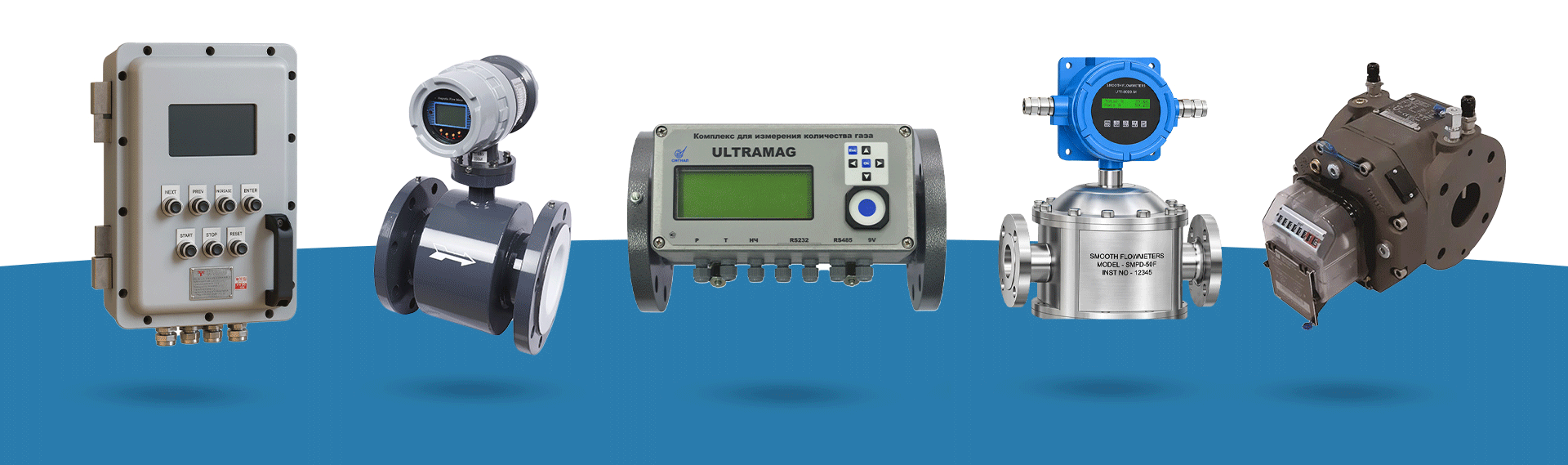
ULTRAMAG is a high-accuracy ultrasonic gas flow meter designed for measuring gas flow rate and volume with integrated pressure, temperature, and gas compressibility correction. It provides accurate gas measurement under both commercial and industrial operating conditions.
2. How does the ULTRAMAG Gas Flow Meter work?
ULTRAMAG uses ultrasonic transit-time technology, where ultrasonic signals travel between piezoelectric transducers installed in the flow path. The transit time difference is used to calculate gas velocity and volumetric flow accurately without moving parts.
3. Which gases can be measured using ULTRAMAG?
ULTRAMAG is suitable for:
• Natural Gas (PNG)
• Biogas
• LPG Vapor
• Industrial Fuel Gas
• Process Gases
making it ideal for gas distribution and industrial gas measurement applications.
• Natural Gas (PNG)
• Biogas
• LPG Vapor
• Industrial Fuel Gas
• Process Gases
making it ideal for gas distribution and industrial gas measurement applications.
4. What is the flow measurement accuracy of ULTRAMAG?
The meter provides:
• ±1% error from Qmax to transition flow
• ±2% error from Qmin to transition flow
ensuring reliable gas billing and consumption monitoring.
• ±1% error from Qmax to transition flow
• ±2% error from Qmin to transition flow
ensuring reliable gas billing and consumption monitoring.
5. What is the turndown ratio of the ULTRAMAG?
ULTRAMAG offers an impressive 1:160 flow rangeability, allowing accurate measurement across a very wide operating range without sacrificing performance.
6. Does ULTRAMAG compensate for pressure and temperature changes?
Yes. ULTRAMAG includes integrated pressure and temperature measurement channels and automatically corrects gas volume to standard conditions using compressibility factor correction.
7. What is the maximum operating pressure of ULTRAMAG?
The meter is designed for gas systems operating up to 1.6 MPa (16 Bar), making it suitable for industrial and gas distribution applications.
8. What pipe sizes are available in the ULTRAMAG Series?
ULTRAMAG is available in:
• DN40
• DN50
• DN80
• DN100
with flow capacities up to 400 m³/hr, depending on the model selected.
• DN40
• DN50
• DN80
• DN100
with flow capacities up to 400 m³/hr, depending on the model selected.
9. Does ULTRAMAG have moving parts?
No. The ultrasonic measuring principle eliminates moving parts, reducing maintenance requirements, wear, pressure loss, and long-term operational costs.
10. Can ULTRAMAG be installed in any position?
Yes. One of the major advantages of ULTRAMAG is that it can be installed in virtually any mounting position, simplifying installation in existing gas pipelines.
11. What communication interfaces are available?
ULTRAMAG supports simultaneous operation of:
• RS232
• RS485
• Optical Port (Optoport)
allowing easy integration with SCADA, telemetry, AMR, and gas management systems.
• RS232
• RS485
• Optical Port (Optoport)
allowing easy integration with SCADA, telemetry, AMR, and gas management systems.
12. How long is the calibration interval?
ULTRAMAG offers a 6-year calibration interval, reducing maintenance costs and minimizing service interruptions.
13. Does ULTRAMAG support battery operation?
Yes. The meter features autonomous battery-powered operation for up to 6 years, making it suitable for remote gas metering stations where external power may not be available.
14. Is ULTRAMAG suitable for hazardous areas?
Yes. ULTRAMAG is available with 1ExibIICT4 X explosion protection and IP65 ingress protection, making it suitable for hazardous gas installations and outdoor environments.
15. Why choose the ULTRAMAG Ultrasonic Gas Flow Meter?
ULTRAMAG combines:
✔ Ultrasonic Technology with No Moving Parts
✔ Integrated Pressure & Temperature Compensation
✔ Gas Compressibility Correction
✔ 1:160 Turndown Ratio
✔ Up to 400 m³/hr Flow Capacity
✔ 6-Year Battery Life
✔ 6-Year Calibration Interval
✔ RS232, RS485 & Optical Communication
✔ Hazardous Area Certification
✔ Natural Gas, Biogas & LPG Measurement
making it one of the most advanced and cost-effective solutions for gas measurement, billing, and industrial gas monitoring applications.
✔ Ultrasonic Technology with No Moving Parts
✔ Integrated Pressure & Temperature Compensation
✔ Gas Compressibility Correction
✔ 1:160 Turndown Ratio
✔ Up to 400 m³/hr Flow Capacity
✔ 6-Year Battery Life
✔ 6-Year Calibration Interval
✔ RS232, RS485 & Optical Communication
✔ Hazardous Area Certification
✔ Natural Gas, Biogas & LPG Measurement
making it one of the most advanced and cost-effective solutions for gas measurement, billing, and industrial gas monitoring applications.